
Tata Electric Scooter 2025: Rumors, Reality & What It Means for India’s EV Market

Is Tata Motors really launching an electric scooter in 2025? The internet is buzzing — but facts matter. This long-form guide separates confirmed news from speculation, explains Tata’s current EV strategy, and shows what a Tata scooter would mean for Indian riders and the crowded e-scooter market. You’ll get a clear, up-to-date summary of what’s known (and what’s not), the most widely circulated rumors and their credibility, how Tata would stack up against established players (Ather, TVS, Ola, Bajaj), and practical buying advice if — and when — a Tata scooter arrives. We also cover likely price and range brackets based on industry trends, after-sales and service expectations given Tata’s dealer strength, and what buyers should watch for (battery tech, warranty, BaaS, and smart features). This article uses verified sources and flags unconfirmed claims so you can make sense of the noise and plan your next EV move with confidence.
Executive summary (fast answer)
Short answer: As of this writing (August 24, 2025), there is no official Tata Motors announcement confirming a production electric scooter; many posts and videos circulating online are speculative or unverified.
What’s true: Tata is a leading EV car maker in India and is actively growing its passenger-EV business — but the company’s official consumer EV site does not list any two-wheeler product.
What to watch: If Tata enters scooters, it would leverage its dealer & service network and brand trust — key advantages versus pure-play e-scooter startups. But widespread rumors about extreme ranges or rock-bottom prices are not confirmed and should be treated cautiously.
1. Did Tata announce a scooter? — The facts
In early-to-mid 2025 a flurry of articles, social posts, and YouTube videos claimed that “Tata” had launched or would soon launch a high-range, low-cost electric scooter. Several automotive outlets and fact-checkers reviewed these claims and found no official press release or product listing from Tata Motors confirming the launch. Major fact-check pieces described many viral posts as unverified or “fake” rumors. Meanwhile Tata’s official EV portal and investor communications focus on passenger EVs (cars) and strategic investments — not two-wheelers. In short: good reason to be excited, but no confirmed product yet.
2. Why the rumor made sense (and why it spread)
A Tata scooter story is plausible — and that’s why it spread fast:
Brand strength: Tata already dominates passenger EV sales (Nexon.ev, Tiago.ev, etc.), so expectations that Tata could move into two-wheelers are natural.
Market context: India’s e-two-wheeler market expanded fast in 2024–25 with legacy makers (TVS, Bajaj) and new players (Ather, Ola) competing aggressively; any Tata entry would be big news.
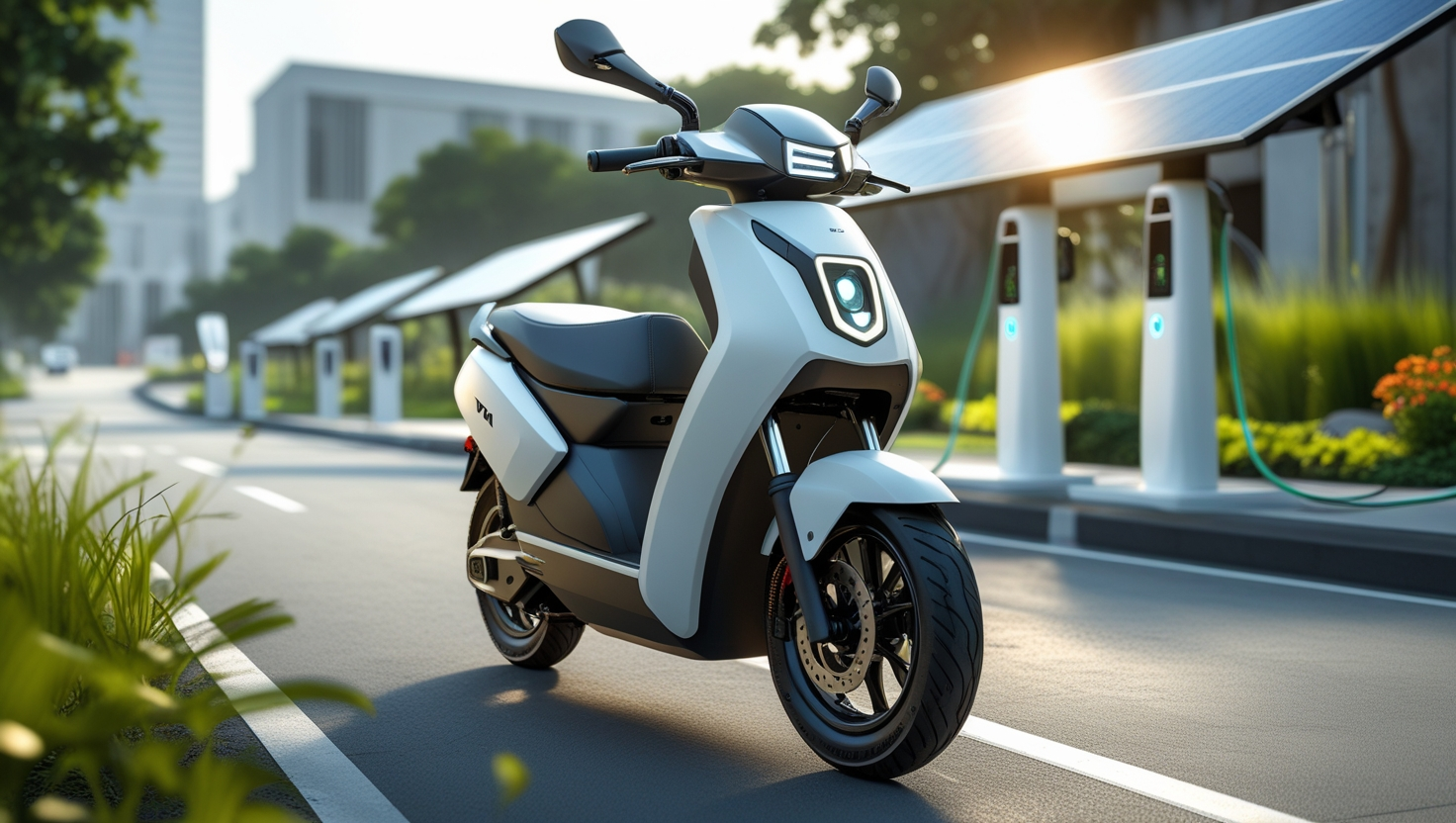
Low barrier for virality: Attractive specs (300 km range, ₹40–70k price) make headlines — even when they’re unverified — because readers want a “game changer.” But extraordinary specs need extraordinary proof. Several rumor posts lacked credible sources and sourced AI-generated images, which is a red flag.
3. If Tata makes a scooter, what would it likely offer? (informed projection)
We don’t know Tata’s plan, but we can reasonably predict what a Tata-branded scooter would focus on, based on Tata’s assets and market needs:
Range & battery options: Expect multiple variants (short-range city variant ~80–120 km IDC, mid-range ~120–180 km) rather than a single 300 km claim — long-range two-wheelers remain expensive and rare. (Compare existing Ather ranges for context.)
After-sales & warranty: Tata’s large dealer and service network would likely translate into robust warranty offers (vehicle + battery) and easier service access than many startups.
Connectivity & software: Smart display, app features, OTA updates and telematics would be expected to compete with Ather, Ola and AtherStack-like features.
Battery model: Battery-as-a-Service (BaaS) or fixed battery options could appear depending on price strategy — BaaS helps lower upfront cost but adds ongoing fees.
Pricing: Realistic entry price would likely sit above the cheapest mass-market models (₹60–1,20k ex-showroom) rather than the sensational sub-₹40k figures sometimes quoted in rumors. (Market players and past launches suggest that high-range, feature-rich scooters cost more.)
4. How Tata would stack up vs current leaders
Here’s a quick comparison of the advantages Tata would likely have, and the challenges it would face.
Potential advantages
Dealer & service footprint: Tata’s existing dealer network for cars could be repurposed for two-wheeler service — faster ramp-up for coverage and trust.
Brand trust: Consumers often prefer an established auto brand for big-ticket purchases; Tata’s EV credibility (Nexon.ev success) helps.
Challenges
Specialized two-wheeler experience: Companies like TVS, Bajaj and Ather have deep two-wheeler product knowledge and established manufacturing lines for bikes/scooters. Entering that domain requires supply-chain retooling.
Competitive pricing pressure: New entrants (including Ola and River) use aggressive pricing and subscription models to acquire market share; Tata would need a clear value proposition beyond brand name.
5. Market snapshot — why timing matters
India’s e-scooter market in 2025 is competitive but maturing:
TVS and Bajaj reasserted strength in volumes in 2025, while newer players are jockeying for share; overall growth is strong but uneven month-to-month.
Users increasingly expect fast charging, decent real-world range (100+ km for many buyers), app integration, and reliable service — features that set winners apart.
A Tata scooter entering now would need to match or exceed these expectations to win meaningful share.
6. What buyers should watch for (if you’re planning to wait or pre-book)
If Tata announces a scooter, don’t act on hype alone. Check these before you pre-book:
Official specs & testing protocol: Look for IDC/WMTC or third-party verified range figures, not optimistic vendor estimates.
Battery warranty and degradation policy: How many years / km and what is the replacement cost or BaaS pricing?
Service network & turnaround: Is your city covered? Will Tata use existing car dealerships or specialized two-wheeler workshops?
Charging options: Home charging time, available fast-charging support, and any partnerships for public charging.
Software & OTA updates: Will diagnostics and features get improved post-purchase?
Real owner reviews: Wait for first owners and independent ride tests rather than influencer-first impressions.
7. Scenario planning: three realistic launch strategies Tata might use
Full in-house scooter (premium offering): Tata designs and manufactures a premium smart scooter, priced to compete with Ather and mid/high Ola trims — uses Tata’s quality and service as the edge.
JV/partnership model: Partner with an existing two-wheeler maker for manufacturing and badge the product as “Tata” for brand trust — faster go-to-market and lower setup cost.
White-label OEM: Acquire or contract a two-wheeler OEM and focus on distribution, after-sales and financing — low R&D cost but relies heavily on partner quality.
Each path has trade-offs in capex, time-to-market, and product control.
8. Realistic timelines (based on industry norms)
If Tata were to move from concept to mass sales, typical timelines are:
Concept/validation (6–12 months): market research, partner talks, prototype.
Pilot & homologation (6–12 months): testing, certifications (AIS/ICAT), safety approvals.
Scaling & launch (6–12 months): production ramp, dealer training, marketing.
So even if development started in early 2025, large-scale deliveries in 2025 would be optimistic — more realistic is a 2026 launch for mass-market rollout unless Tata uses a JV to accelerate timelines. This helps explain caution among credible outlets about mid-2025 launch claims.
9. FAQs (short & practical)
Q: Has Tata confirmed a scooter launch date?
A: No official confirmation as of Aug 24, 2025. Treat social posts and YouTube leaks as unverified until Tata issues a press release.
Q: Will a Tata scooter be affordable?
A: If Tata aims mass-market penetration, expect competitive pricing, but not unrealistically low figures. Look for variants and financing offers.
Q: Should I wait for Tata or buy an Ather/TVS/Ola?
A: If you need a vehicle today, buy based on verified specs and local service. If you can wait and prefer Tata’s brand & service, monitor official announcements.
10. Bottom line — practical advice for buyers and watchers
Buyers who need a scooter now: Choose from established models (Ather, TVS iQube, Bajaj Chetak, Ola legacy models) and verify local support and range in real-world tests.
Buyers who prefer Tata specifically: Wait for an official Tata release. If a pre-book window opens, validate specs, warranty, and service promises carefully.
Industry watchers: Tata entering two-wheelers would reshape market dynamics (dealer reach, fleet sales, OEM price pressures). Follow Tata’s investor communications and official Tata.ev news updates for confirmations.
Conclusion
The idea of a Tata Electric Scooter in 2025 is exciting — it makes sense strategically and could leverage Tata’s EV credibility and dealer network. But the evidence available in mid-2025 points to rumor, not confirmation. Credible outlets and fact-checkers urged caution, and Tata’s official channels did not list a scooter product at the time. If and when Tata formally enters the two-wheeler market, expect a careful rollout focused on service, warranty and a choice of variants rather than miracle specs or rock-bottom prices. Until then, treat viral specs as interesting noise and base any buying decision on verified data, real-world tests, and clear warranty/service commitments.